Can a WhatsApp AI assistant remember a customer's past conversations?
Yes — but not because an AI model has a magical memory of every person who has ever messaged your business. A WhatsApp assistant can use a customer's previous questions and preferences when the conversation history is stored, the returning customer can be matched to that history, and the assistant is allowed to use the relevant context in its next reply.
That is the difference between a useful returning-customer experience and a chatbot that starts every conversation with "How can I help you today?" In whacl, the customer thread remains available in the business inbox, so the assistant can work from what was already discussed instead of treating each new message as an isolated question.
What a returning conversation can look like
Imagine a customer messages your WhatsApp number on a Monday and asks whether a particular dining table is available in walnut. Your assistant answers from the catalog, gives the current price, explains delivery, and notes that the customer wants delivery to Manchester in the first week of July.
Three weeks later, the customer writes: "Is that table still available?"
A whacl reply can use the earlier thread to connect "that table" to the earlier conversation, then answer from the business's current catalog and policies. It does not need to ask which table, what finish, or where the customer wants it delivered unless something has changed or the old information is no longer reliable.
The same applies to questions such as:
- "Can I order the same size as last time?"
- "Has the blue version come back in stock?"
- "I asked about delivery to Bristol a few weeks ago — what was the price?"
- "Do you still have the allergy-free option you recommended?"
The assistant can use the earlier thread to understand what "same," "blue version," or "the allergy-free option" refers to. It can then use the business's current catalog and policies before replying, rather than repeating an old price or making up an availability answer.
Conversation history is not the same as a permanent customer profile
The main source of context is the conversation thread: the messages the customer and business have already exchanged. Those messages may include a stated preference, such as a preferred size, delivery location, budget, or product type.
A stored thread gives whacl the source material. It can use the fact that a customer previously said, "I only want vegan options," or asked for delivery after 6pm, when that detail is relevant to the next reply. The business should still treat the message as context to check, not as a guarantee that the preference is permanent.
This distinction matters because old messages are not always current. A customer may have said they wanted a black sofa in March and changed their mind in April. They may have asked for delivery to one address and later placed an order to another. The latest clear instruction should take priority over an older one.
For that reason, whacl should use past conversations as context, not as permission to assume that every old detail is still true. Current catalog data, current pricing, and current policies remain the source of truth for business facts. Previous messages help the assistant understand the customer; they do not override what the business currently sells or allows.
What whacl can use from the thread
The useful information is often more practical than a full customer profile. It includes the product the customer was asking about, the question that was left unresolved, the options already rejected, and the point at which the conversation was handed to a human.
- The product or service discussed previously.
- The customer's stated size, colour, budget, location, or use case.
- Questions that were answered and questions that still need an answer.
- A previous quote, appointment request, or delivery question.
- Whether the customer asked for a human or was already speaking with a team member.
- The point where the assistant should stop and hand the conversation to staff.
For example, if a customer previously explained that they need a replacement part for a 2021 model, the next assistant reply can start from that detail. If they were already told that the part needs to be checked by a technician, whacl can avoid sending them through the same basic product questions again.
This is especially useful when a customer returns after a gap. A two-week pause should not erase the context of a buying decision that took several messages to explain.
The customer still needs to be identifiable
Memory only works when a new message can be connected to the right customer record. On WhatsApp, the number is normally the main identity available to the business. If the customer returns from the same WhatsApp account, the previous thread can usually be associated with that account in the inbox.
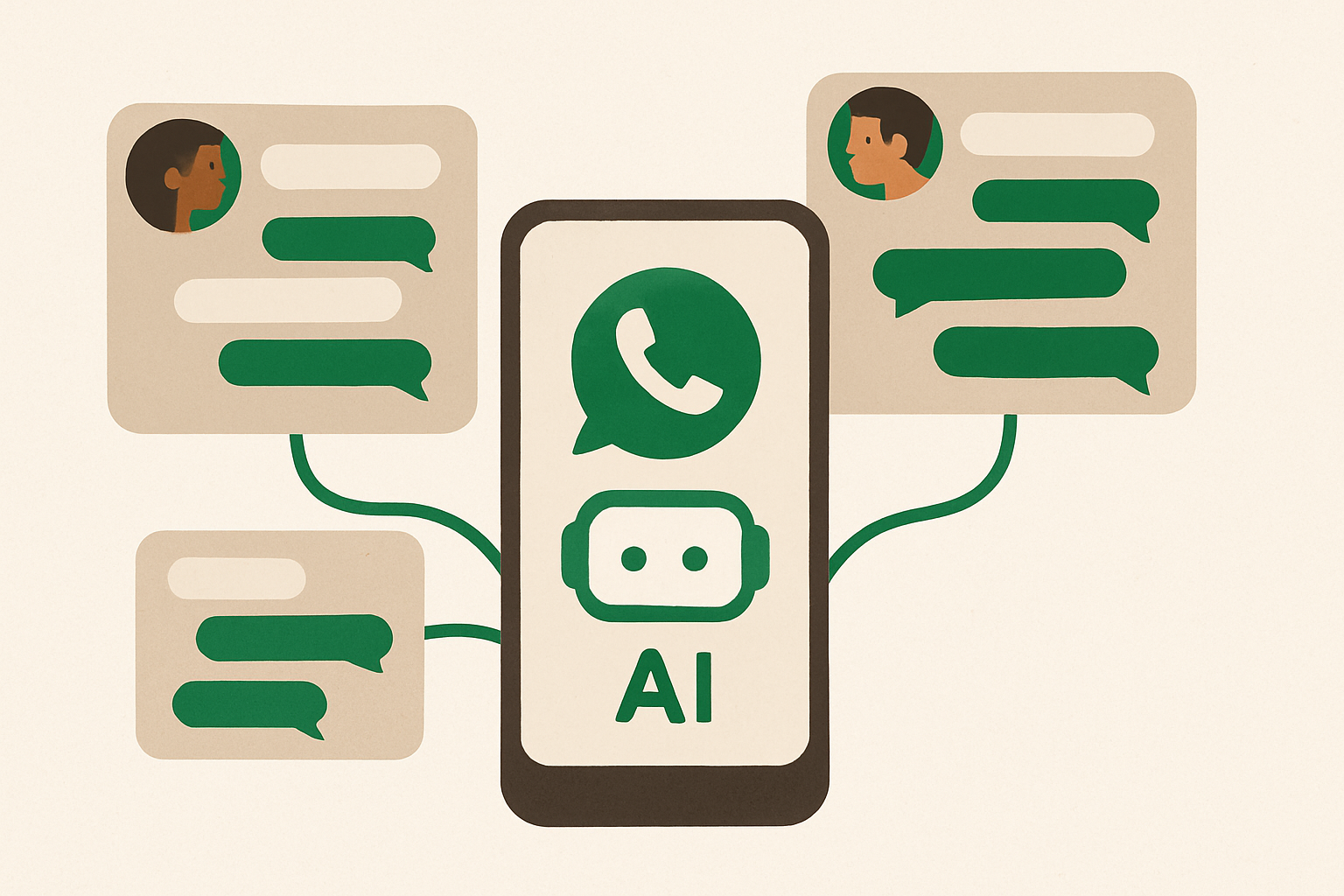
The same principle applies when the message arrives through Instagram or Messenger. whacl puts WhatsApp, Instagram, and Messenger conversations into one inbox, but a person using different accounts across those channels may not automatically appear as one customer. The assistant should not merge two profiles just because the names look similar.
If a customer says, "This is Sarah from Instagram," a team member can connect the context manually when needed. Until that happens, the safe behavior is to use the history attached to the current channel and ask a short clarifying question rather than expose details from another person's conversation.
This is why a business should not promise that the assistant knows every customer across every channel automatically. Cross-channel visibility in whacl gives the team one place to work; it does not make different social accounts the same identity without a reliable match.
The assistant should verify facts before using old ones
A remembered preference and a remembered business fact need different treatment. "The customer prefers medium shirts" can help personalize a recommendation. "The shirt costs £40" must be checked against the current catalog before it is repeated weeks later.
whacl's assistant replies using the business's own catalog and policies, which gives the conversation a defined source for product details, delivery rules, returns, opening hours, and other answers. The previous thread supplies the customer's context; the current business information supplies the answer.
That combination prevents a common failure: continuing an old conversation with an outdated promise. If the delivery fee changed, a product went out of stock, or the returns policy was updated, the assistant should use the current information even if an earlier message said something different.
When the old thread conflicts with the current catalog or policy, the reply should say so plainly. For example: "The price has changed since we last spoke. The current price for the walnut finish is £X, and delivery to Manchester is £Y." That is more useful than silently repeating an old answer.
Review mode gives the business control
A business does not have to choose between sending every reply automatically and having no AI assistance. whacl includes review mode, where the assistant drafts a response using the conversation context but waits for a person to approve or edit it.
Review mode is a sensible starting point for returning customers whose conversations involve exceptions, previous complaints, negotiated prices, or several linked orders. The team can check the draft against the older messages and send the answer with the necessary correction.
Once the business is comfortable with replies for routine questions, it can use auto-send for clear catalog and policy questions. A question about current stock, standard delivery, or a published return window can be answered instantly, while a refund request or unusual commitment can remain in review.
The setting does not need to be all or nothing. A business can use whacl's review mode for conversations that need approval and auto-send for routine replies, while keeping the full thread available when a human needs to take over.
Human handoff keeps the history intact
Some returning conversations should not stay with the assistant. A customer may be upset, asking for a refund outside the policy, discussing a high-value order, or referring to a promise made by a staff member. Those situations need a person who can make a judgment and take responsibility for the answer.
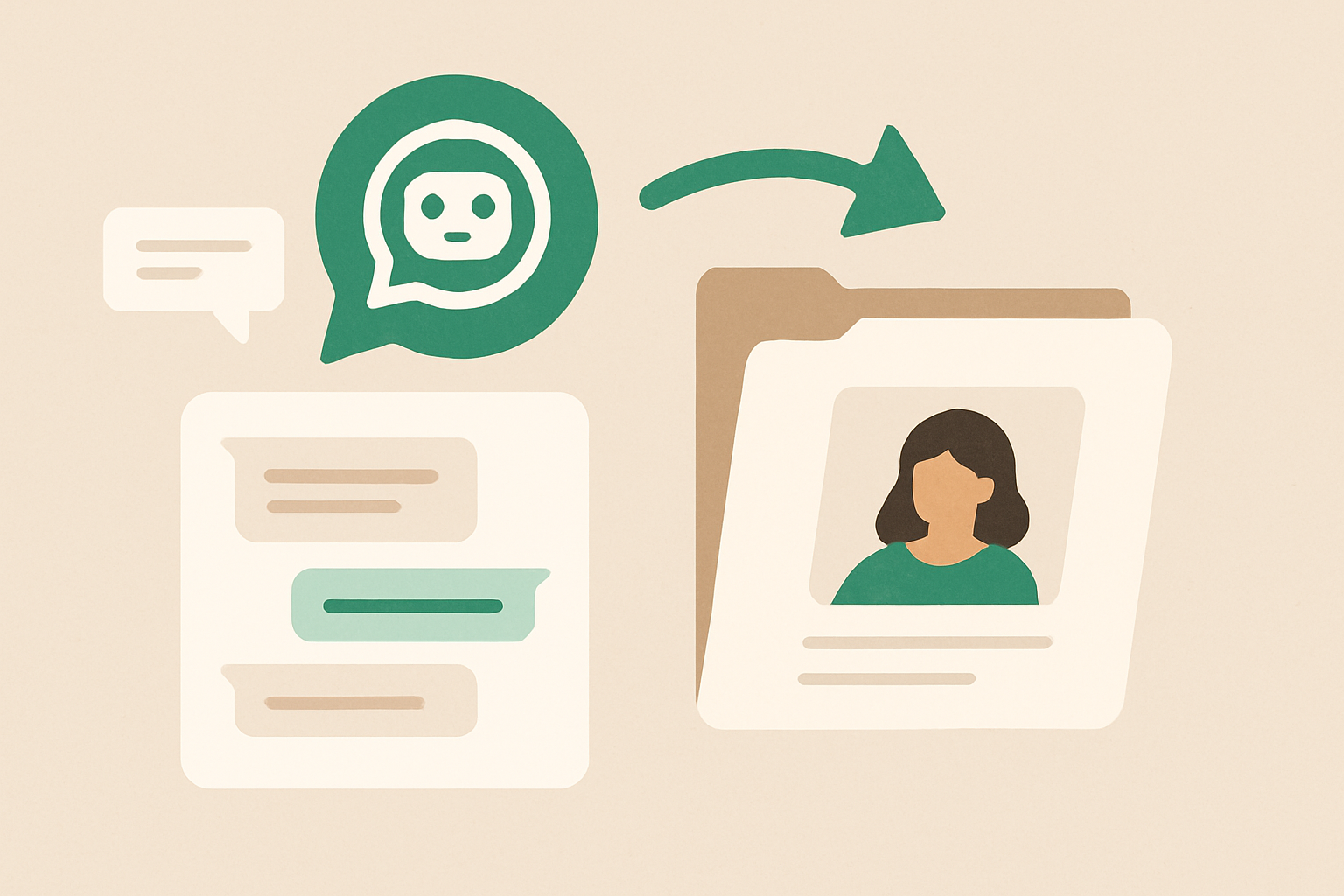
When whacl hands the conversation to a human, the team receives the full thread context rather than a blank inbox and a note saying "customer wants help." Staff can see the previous questions, the assistant's replies, the customer's stated preferences, and the point that triggered the handoff.
That prevents the customer from having to write the same explanation a second time. It also lets the human correct the assistant's interpretation quickly: "I can see you wanted delivery next Friday, not the standard delivery window. Let me check that for you."
After the human has replied, the later conversation remains part of the thread. If the customer returns again, the business has a clearer record of what was actually agreed, rather than relying on someone remembering a chat from several weeks earlier.
Which model should handle the reply?
The model is only one part of this setup. whacl lets a business switch between Claude, GPT, and Gemini from one setting, so the team can choose the model that produces the best replies for its catalog, policies, and style.
Changing models does not remove the conversation history stored in the inbox. The important context remains attached to the customer thread; the selected model uses that context when generating the next reply. A business can test a model in review mode and check whether its drafts identify returning products correctly, follow the catalog, respect policies, and know when to hand off.
The choice should be based on the replies customers actually receive, not on a general claim that one model remembers better. The model does not replace the thread, the business's catalog, or the review and handoff controls.
Track the cost of remembered replies
Longer context can be useful, but sending an entire old conversation to a model for every short message may cost more than necessary. whacl's cost-per-reply tracking lets the business see what its AI replies are costing instead of treating usage as an invisible monthly bill.
This makes it possible to compare practical choices: whether a short summary is enough for a routine returning question, whether a long thread is needed for a complex order, and whether auto-send is being used for conversations that should have gone to review. A business can keep the context that changes the answer and avoid paying to resend irrelevant messages.
So, can it remember a customer weeks later?
Yes, when the customer returns through an identifiable account and the relevant conversation is available in whacl's inbox. The assistant can use the earlier questions, preferences, and unresolved details to make the next reply feel like a continuation rather than a new intake form.
The reliable setup is straightforward: load the business's real catalog and policies, keep the conversation history connected to the right channel identity, start uncertain cases in review mode, and hand off exceptions with the full thread attached. Use the current catalog for today's facts, and use the old conversation to understand what this customer means.
That is what customer memory should do in whacl: remove repetition without inventing certainty, personalize the next answer without exposing the wrong history, and give a human enough context to take over when an automated reply is not appropriate.