WhatsApp's Catalog feature isn't a chatbot, and treating it like one costs you leads
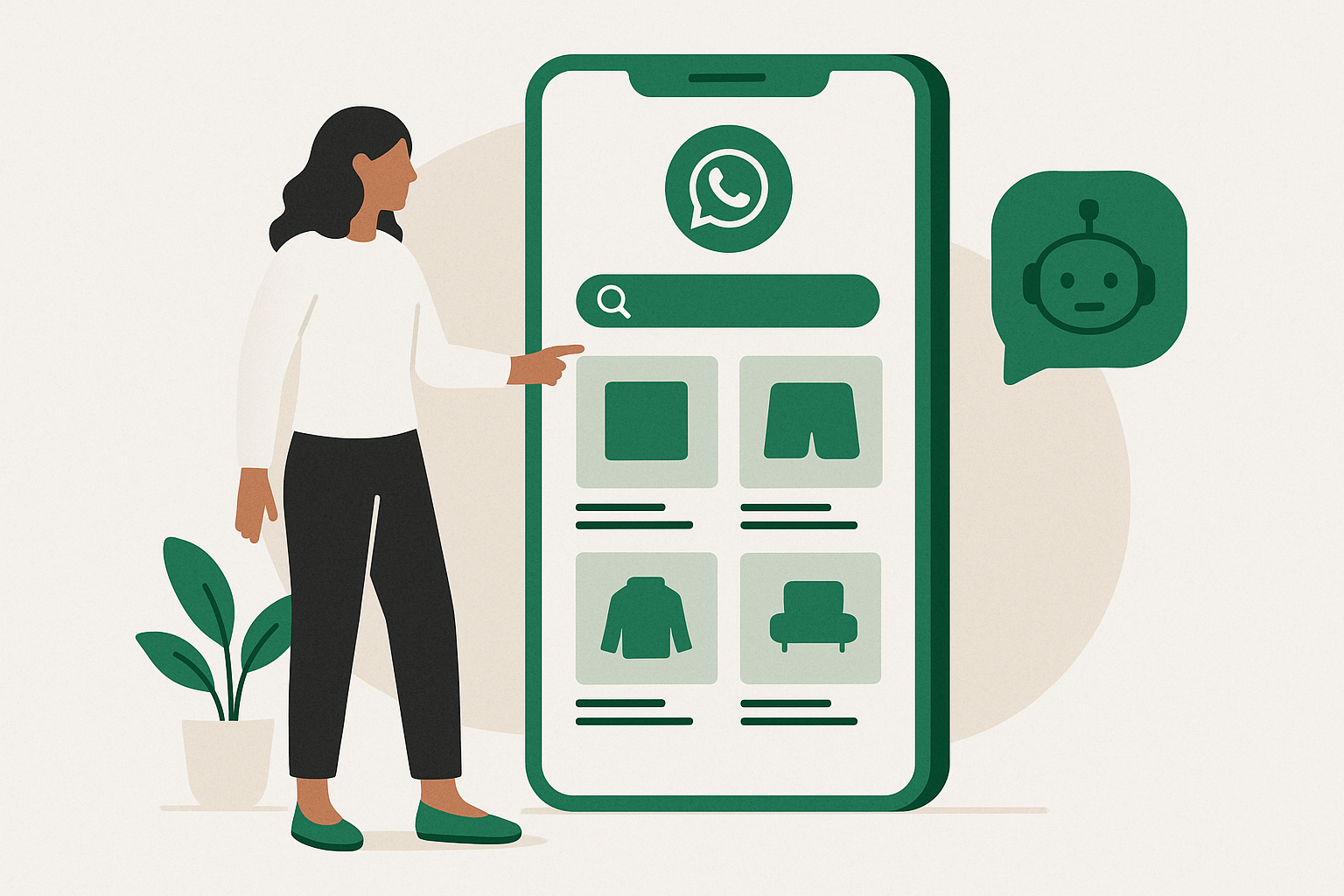
A business posts a product to its WhatsApp Catalog — photo, name, price per square metre. A customer taps it, likes what they see, and messages back: "do you have this in a different finish, and can you get it to me by Friday?" The catalog card has no answer to that. It was never built to have one.
What the catalog actually does
WhatsApp's Catalog is a browsable showcase, not a database you can question. You upload items with a photo, name, price and short description; a customer opens the shop button, scrolls, and can add things to a cart that gets sent to you as one order. That's the entire feature. There's no field for "answer whatever the customer types next" — the card is fixed the moment you save it, and every follow-up question falls straight back into the regular chat, where nobody's watching until someone is.
Where it breaks down for anything with real variation
A catalog card works cleanly for a product that's genuinely one thing at one price. It works badly for anything a customer might reasonably want a variant of — a different size, a different finish, a delivery estimate, a bulk price. Those aren't edge cases for most product businesses; they're most of the questions. "Do you have this in 2cm" and "what's the price for 40 square metres delivered to Casablanca" are both completely normal things to ask about a single catalog listing, and both are questions the listing itself cannot answer.
Two different jobs, not one feature replacing the other
The catalog is for browsing — someone scrolling who hasn't decided what they want yet benefits from photos and prices they can flip through. The moment a specific question gets typed, that's a different job: reading the actual catalog and policies and giving a real answer, in the thread, in whatever language the customer used.
This is the part whacl is actually built around. It reads the same catalog, pricing and policies a human would need to answer that question — not a separate copy someone has to keep updating twice — and answers it the moment it's asked, in the same conversation the catalog card was sent in. The card gets someone interested; the reply after it is what keeps them from going quiet.
What a catalog card can't do, on its own
- Answer "do you have this in [size / colour / finish]"
- Confirm whether you deliver to a specific city, or by when
- Combine two things at once — a quantity and a delivery zone, a product and a payment method
- Remember what the customer already said two messages earlier
- Say "not exactly that, but here's the closest thing we actually have"
None of that is a catalog bug. It's just not what the feature is for. Treating it as the whole answer is what turns an interested customer's follow-up question into the silence that loses the sale.