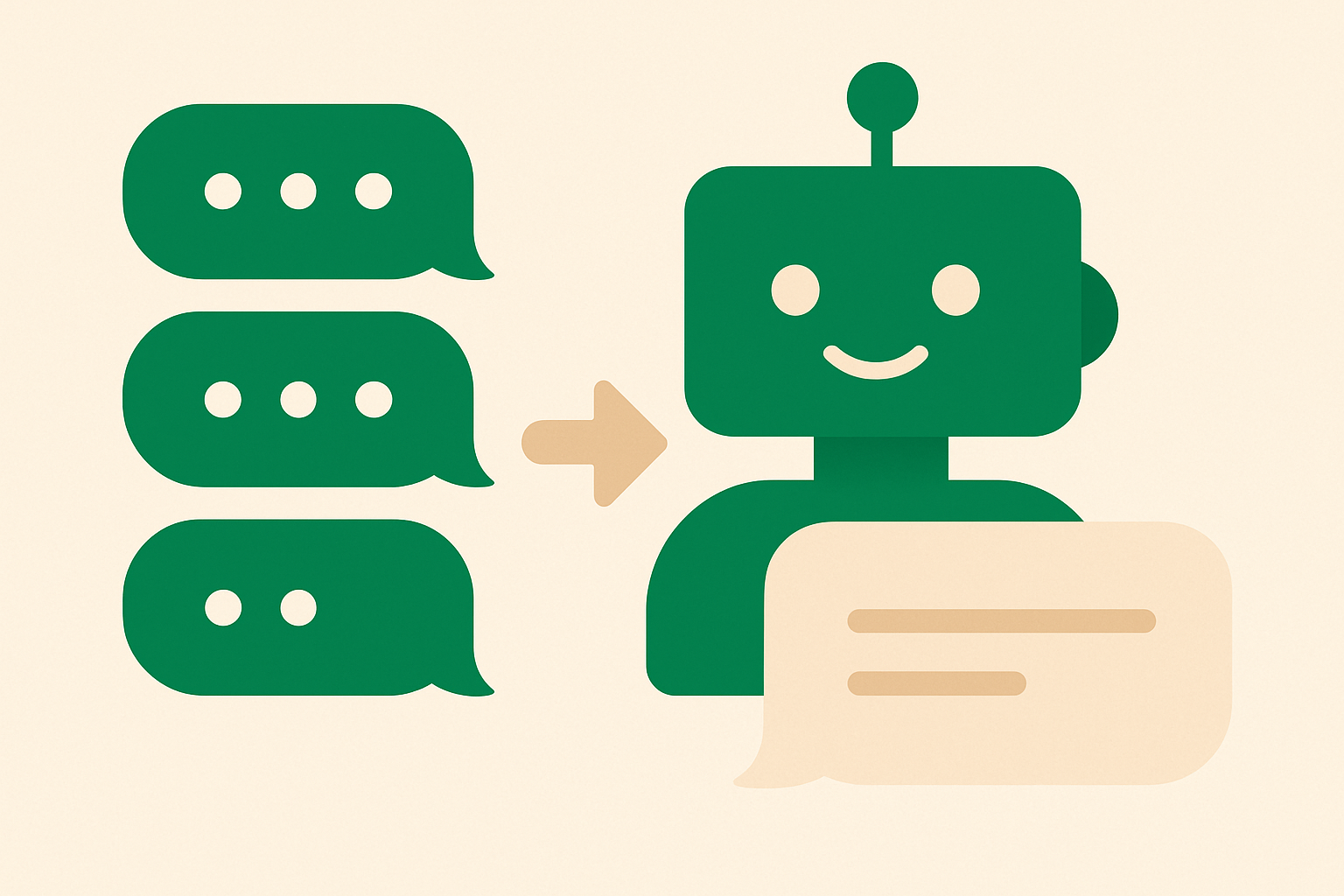
Can whacl answer customers conversationally from my business context?
A customer rarely asks a question in the exact form you prepared for. They might write, “Do you have something for a small office, and can it arrive before Friday?” after seeing one product on Instagram. A pre-written reply can send a price list or a generic contact message, but it cannot combine product information, delivery rules, and the earlier conversation into a useful answer.
whacl generates replies from the information you provide about your business: your catalog, prices, availability rules, delivery areas, returns policy, opening hours, and other instructions. The customer can ask the same question in different ways and still receive an answer based on that business context.
What “business context” means in whacl
Your business context is the material whacl uses when generating a reply. For a retailer, that might include product names, descriptions, variants, prices, sizes, stock notes, and delivery charges. For a service business, it could include appointment types, service areas, lead times, cancellation rules, and what each package includes.
Policies are part of the context too. A catalog may show what you sell without explaining whether you deliver to a particular location, when an order can be changed, or whether an item can be returned. Adding those rules gives whacl information it can use when answering follow-up questions.
You can also provide instructions for handling conversations. For example, tell whacl to ask for a delivery postcode before quoting a delivery fee, avoid promising unconfirmed stock, collect a customer's preferred appointment time, or hand a conversation to a person when the request falls outside the information provided.
It does not need a matching sentence
A pre-written reply depends on a phrase someone anticipated. If the saved reply says, “We deliver nationwide. Please visit our website for details,” it gives the same answer to someone asking about next-day delivery to a specific postcode and someone asking whether delivery is available to another country.
whacl can use the customer's question together with your business information. “I need this for a two-person team,” “Would this work in a small office?” and “Which option is best if we need it by Thursday?” are different questions, but your catalog, delivery rules, and recommendation instructions can be used to answer each one.
Because the reply is generated for the conversation in front of it, whacl can refer to details the customer has already provided and answer follow-up questions without asking them to restart with a command such as “type 2 for pricing.”
A practical example
Imagine you sell office furniture and provide your catalog to whacl. Your business context says that the Compact Desk is suitable for small rooms, costs $240, takes three to five working days to deliver, and is available in white and oak. It also says that delivery fees depend on postcode and that returns are accepted within 14 days for unused items.
A customer messages on Instagram: “I’m setting up a tiny home office. Need something simple, not too wide. Can you get it to Manchester this week?”
whacl can use the product description to mention the Compact Desk, use the stated delivery window to explain that delivery this week may be possible, and ask for the postcode because your policy requires it before calculating delivery. If the catalog does not confirm enough information, it can say what it knows instead of inventing a guarantee.
The customer might then ask, “Is oak more expensive, and what happens if it doesn’t fit?” Because the price and returns policy are part of the same context, whacl can answer both questions in the next reply rather than requiring separate saved replies or a manual search through different documents.
The conversation can start on any supported channel
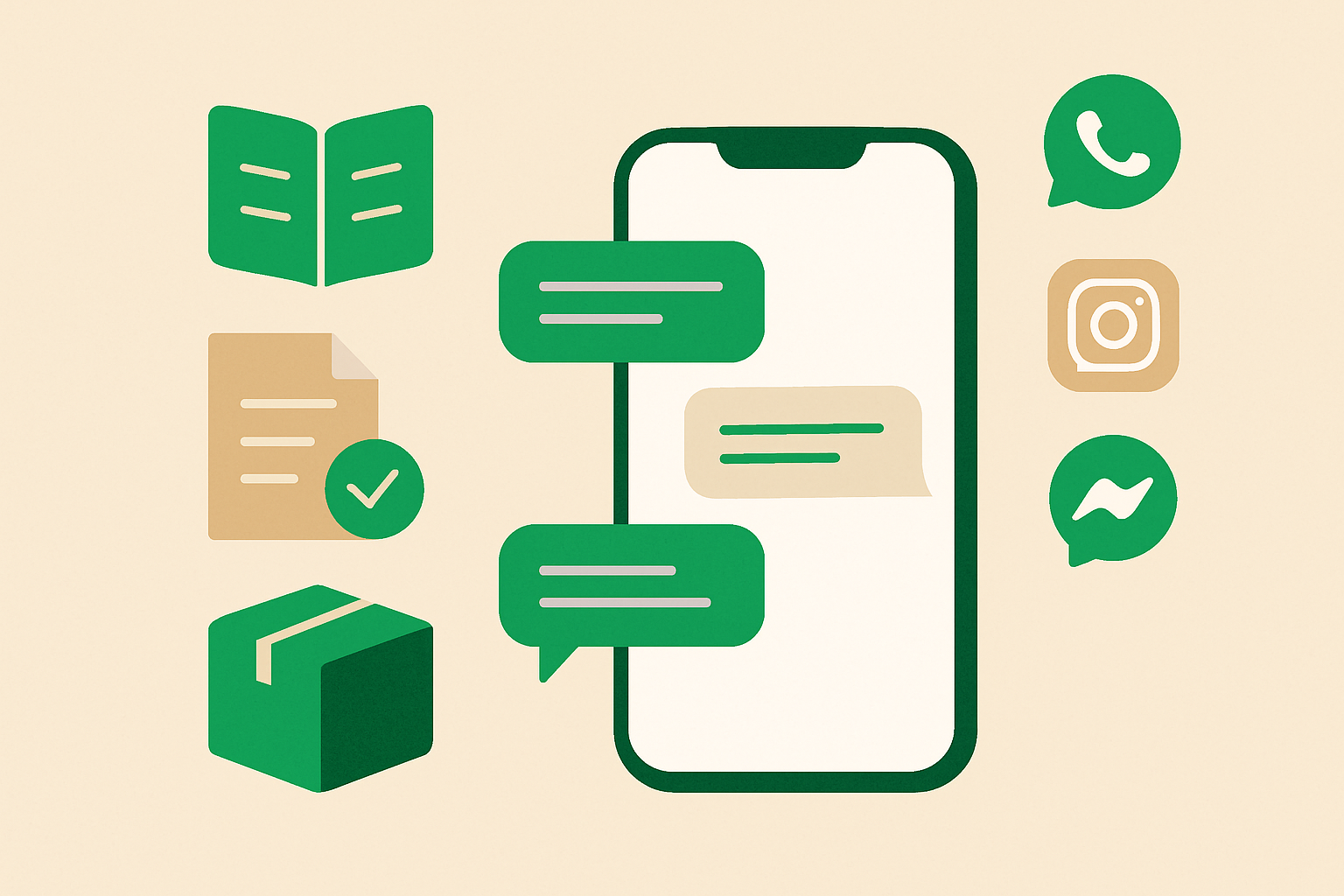
whacl brings WhatsApp, Instagram, and Messenger into one inbox. The assistant can reply in the channel where the message arrived, while your team works from the same place instead of checking three separate apps.
The channel does not change your business context. A product question sent through Instagram can use the same catalog and policies as a WhatsApp conversation, and a Messenger inquiry about opening hours can use the same business information.
This lets customers ask casual questions through social media or start a purchase and booking conversation on WhatsApp without being forced into a different channel first.
You choose how much automation to allow
Conversational replies do not have to go straight to the customer on day one. In review mode, whacl prepares a reply from your context and a team member can review, edit, approve, or handle the message themselves.
Review mode lets your team check whether the catalog and policies provide enough information before enabling automatic replies. When the answers are working as expected, you can use auto-send for the questions and channels you want handled immediately.
You can apply different levels of control to different conversations. For example, you might allow auto-send for catalog questions but require review for unusual discounts, complaints, refunds, or requests that need an internal decision. Your instructions and handoff rules determine where whacl should stop.
Human handoff keeps the full thread
Some questions should end with a person. A customer may be disputing a charge, asking for a custom quotation, reporting a damaged order, or requesting something your business context does not cover. In those cases, whacl can hand the conversation to a human instead of forcing an answer.
The team member receives the full conversation thread, including what the customer asked, the details they provided, and the assistant's earlier replies. The customer does not need to repeat their order number, postcode, product choice, or problem when the conversation changes from AI to human.
You can switch the model without rebuilding the setup
whacl lets you choose between Claude, GPT, and Gemini from one setting. Your business context, channel connections, review settings, and handoff process remain in whacl while you change the model used to generate replies.
You can test a model in review mode, compare its drafts with the conversations your team receives, and decide whether it is suitable for auto-send. Changing the model does not require rebuilding separate WhatsApp, Instagram, and Messenger workflows.
Cost is visible per reply
whacl tracks cost per reply, so you can see what conversational generation is using. You can review the number of replies, their associated cost, and the channels where they happened.
This also gives you a way to compare Claude, GPT, and Gemini against your actual message volume. You can consider both the replies a model produces and what those replies cost, then change the model from the same whacl setting.
What whacl should not do
A conversational answer is only useful when it stays within the business information provided. whacl should not make up stock, promise a delivery date your policy does not support, approve an exception that requires a manager, or invent a product specification to sound certain.
Your catalog and policies therefore need specific rules. “Fast delivery” gives whacl little to work with. “Orders to listed postcodes leave within one working day; standard delivery takes three to five working days; ask for the postcode before quoting the fee” gives it a rule it can apply.
For requests that need judgement, use review mode and handoff rules. If a customer asks for a discount and no discount policy exists, whacl can send the request to your team rather than treating a general sales instruction as permission to negotiate.
So, can it answer conversationally?
Yes. whacl can generate a reply from your catalog, policies, instructions, and the conversation already taking place, instead of sending a fixed response that only matches a prepared phrase. It works across WhatsApp, Instagram, and Messenger from one inbox, with review mode or auto-send depending on how much control you want.
When the conversation needs a person, the full thread moves with it. When you want to compare Claude, GPT, and Gemini, you change one setting. When you want to understand operating cost, whacl tracks cost per reply. The result is one business context that can be used to answer the questions customers actually ask.